Inside NY Creatives is a portrait series where I visit artists across the Hudson Valley to explore their spaces, their rhythms, and the stories behind their work. Each conversation is a door into their creative world.
Most of the time, I reach out to artists I know or want to know better, and we schedule a visit in advance…
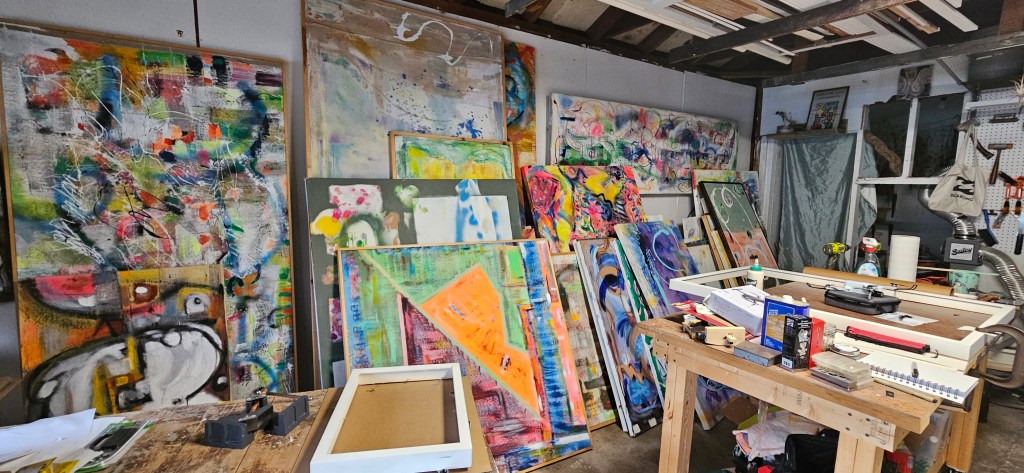
Janene didn’t give me time to plan. One day, out of the blue, she invited me into her garage studio, which she shares with her husband Bill, a photographer, and her daughter Andrea, who keeps her ceramic kiln there. Canvases were everywhere, colors splashing around like in the Froth on the Daydream, by Boris Vian.
She is a burst of energy — impulsive and bold, yet warm and inviting, always ready to leap. Every time she tells me a story, I find myself listening with full attention, caught by her freedom and her spark.
When I asked the first question, Janene closed her eyes and embraced the exercise so deeply, I dove into this interview with delight.
If you had to describe your art to someone who cannot see, or who cannot perceive color, what would you say?
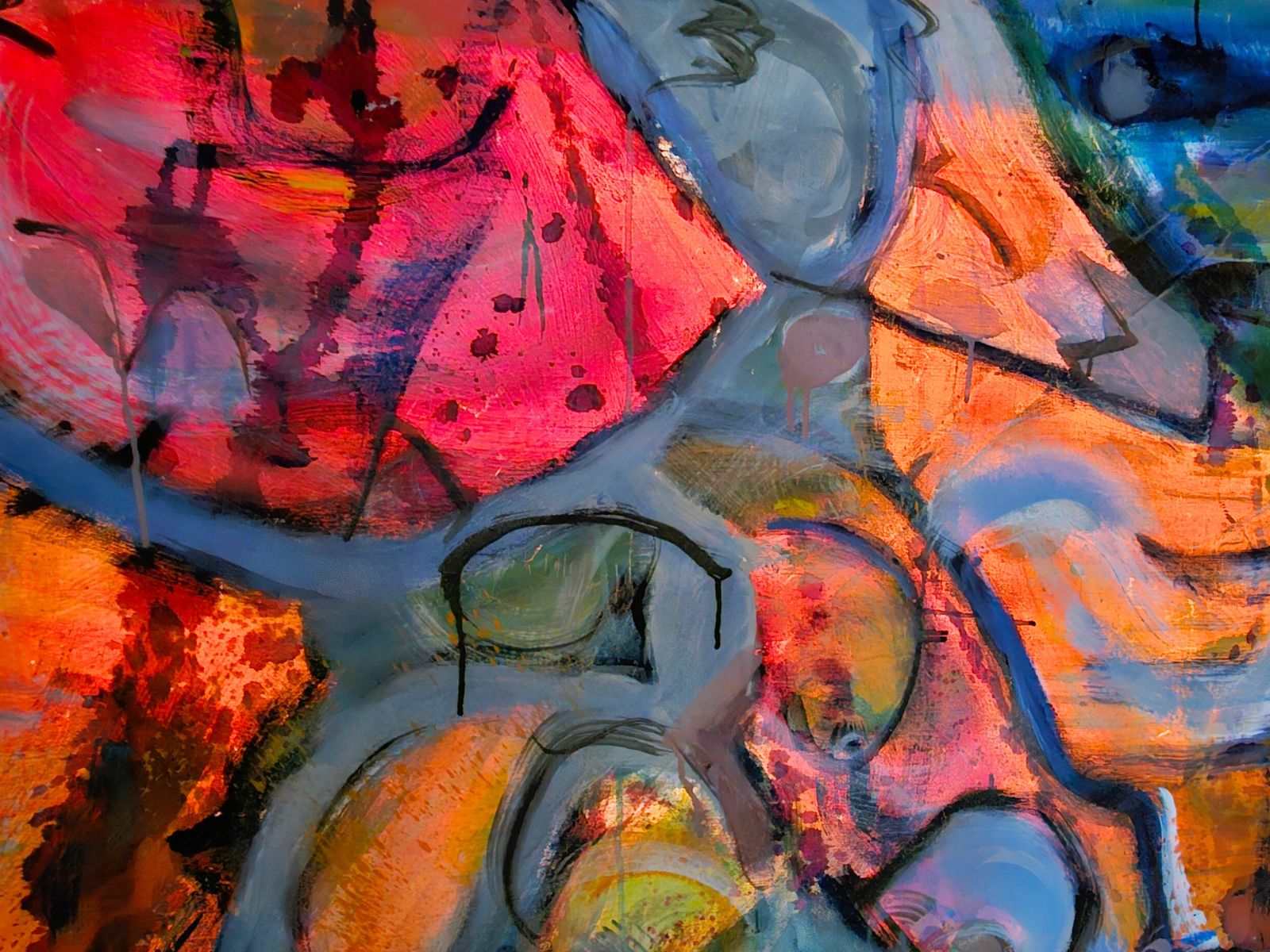
I’d say my art is full of light, of energy, of enthusiasm and rhythm — and sometimes a little discord. Much like music… maybe jazz. If you were blind and sitting with me, and I had to describe a piece, I’d tell you it has a lot of energy and light, a lot of movement… and it’s musical.
That leads us to the next question. The way you talk — the way you use sound and gesture as much as words, sometimes even more than words — I love it. And I think it feels really close to how you paint.
If you had to explain the techniques and mediums you use in words — and then add all the sounds and gestures you naturally use when you talk, how would you describe it ?
I am very expressive in my language, in my hand gestures and body language. I see or feel the pieces begin as a dance. They’re not planned — they’re automatic, almost like entering a trance. In that trance, there’s movement, and I go back and forth with my medium: acrylic paint, spray paint, sometimes collage, different materials combined together. But as you can see around the space, it’s mostly color. I feel constantly pushed and pulled to find what is beautiful together, because I see the world — even its pain — as something beautiful, as something to embrace.
When people see my work, they often tell me it feels happy. I’m glad the audience feels that way, but it doesn’t necessarily reflect the gestures I’m making when I paint. There’s always music on — older music from the 60s, meditative music, hip-hop, dance — so there’s always a dance happening in the material. And I’ll use anything: painter’s backdrops, burlap, even linen sheets like the one right there. It’s all feeling, a constant feeling, and that’s what gets translated.
Do you remember the moment you started calling yourself an artist?
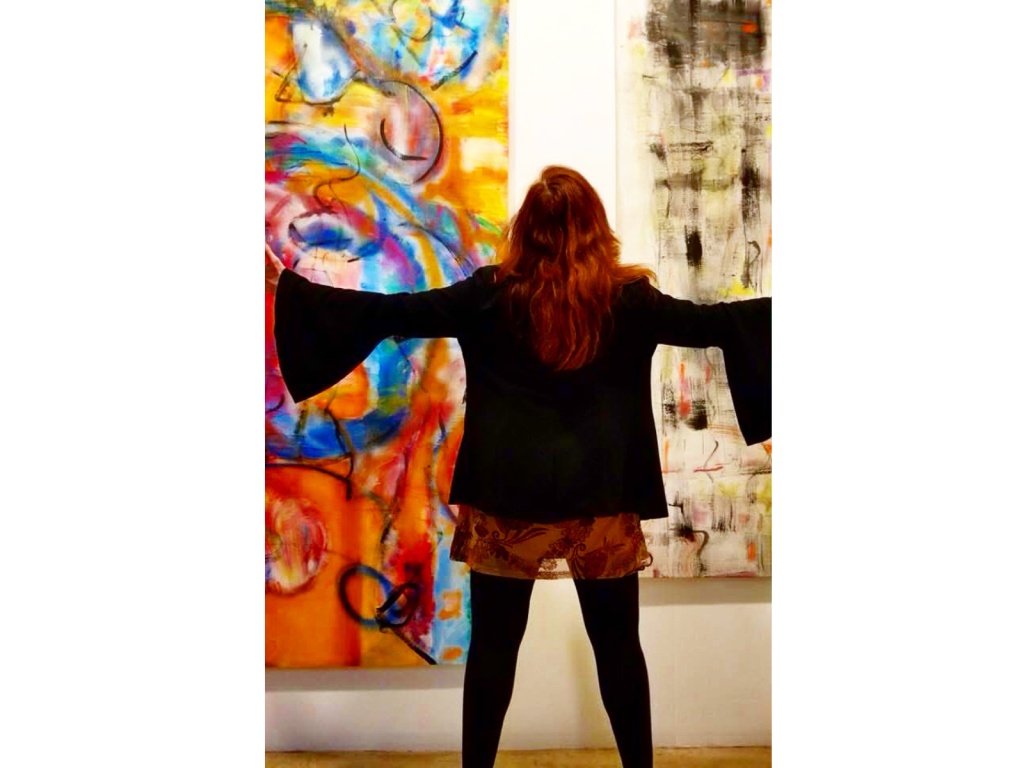
The creative process started very early in my life. In early adolescence, I knew there was a sense of feeling different. I don’t know if I ever actually said “I’m an artist,” but I knew there was something in me that needed to come out. In the early 60s, as a young adolescent, I would paint the windows in my room with different themes — sunlight, rainbows — to my mother’s surprise. I painted on any material I had: drop cloths, sheets, anything I could pin up on the walls.
At the same time, I was learning instruments — piano, violin, guitar, bass. Everything felt like it had to come out. I knew there needed to be a place for that, and art became that place.
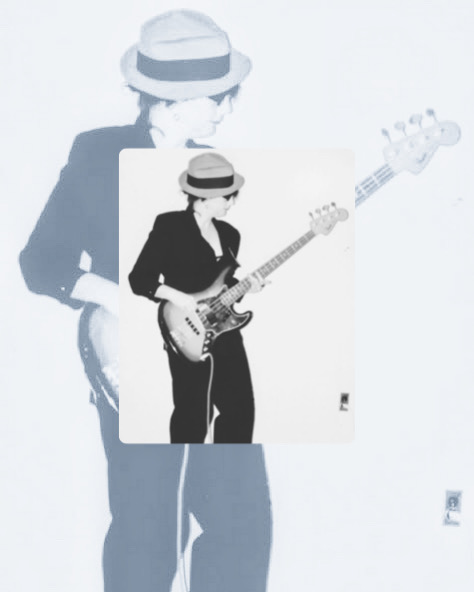
We are in your garage, surrounded by your work. You said it’s a shared space with your husband and your daughter. You also have a basement — is the basement YOUR space?
Pretty much, yes — though it’s shared with the laundry room and the records (hahaha). But mostly, it’s mine.
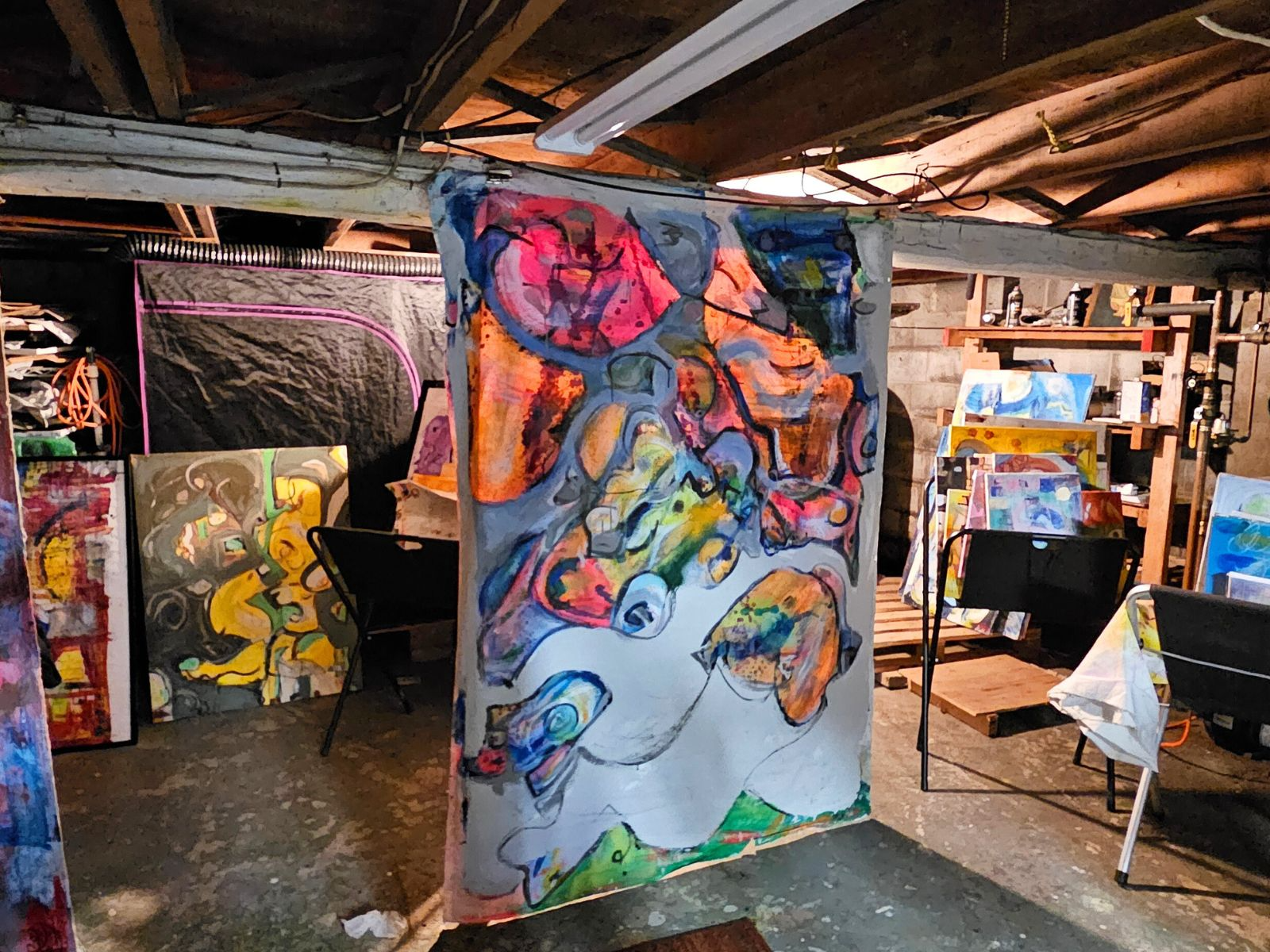
What relationship do you have with your studio? Is it like a lover, a close friend, a confidant, maybe a therapist? Or something else?
I would say a lover. It’s very sensual. It’s funny you ask, because about a week ago I had that reflection. I hadn’t been painting large for a while. Since my accident (Janene badly broke her leg last year NDRL), I’d been making smaller pieces, and they were satisfying in their way. But one day recently, I went downstairs (in the basement NDRL) , and I opened up a piece — maybe it was the blue that drew me — and I started reworking an old canvas, more than 30 years old. It felt sensual, more than sexual. The act of moving that blue, of being part of that blue, was exciting again. I had no hesitation changing it, moving it, reworking it. I thought: why am I not doing this more often? It felt so good.
If your studio could speak back to you, what do you think it would say?
“Turn the music louder. Maybe organize me a little. Come down here more. Why aren’t you here more often?”
I have a mystery box with questions from different people. Questions they have always wanted to ask an artist. Can you pick one?
What question about your art do you wish you could answer again?
I think that my answers have always been very authentic, so I don’t feel like I wish I could answer any differently.
When Janene picked this question, I felt it wasn’t the most fitting for her — I can’t imagine her ever holding anything back. Her answers are always raw, spontaneous, and straight to the point. And as our conversation wound down, that same openness was still there…
At the end of our interview, I found myself with new art supplies under my arm and new mediums I was eager to explore. Janene’s generosity is contagious — she sends you back into the world with fresh tools in your hands and sparks in your mind.
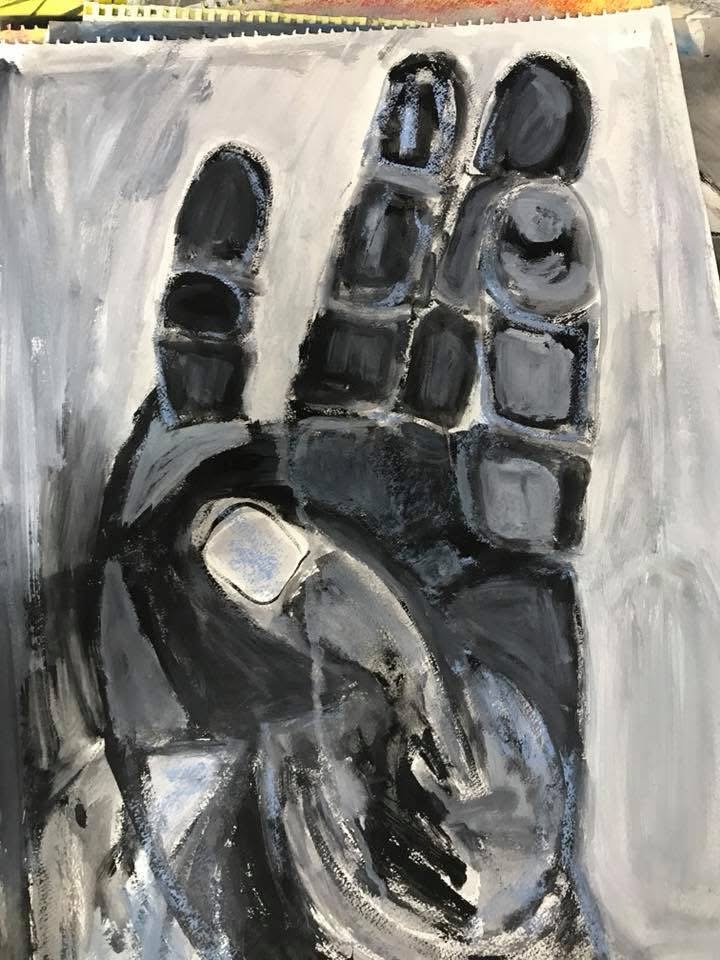
Follow Janene’s work :
Instagram : gentilesquarespace
 vaeadang.com